
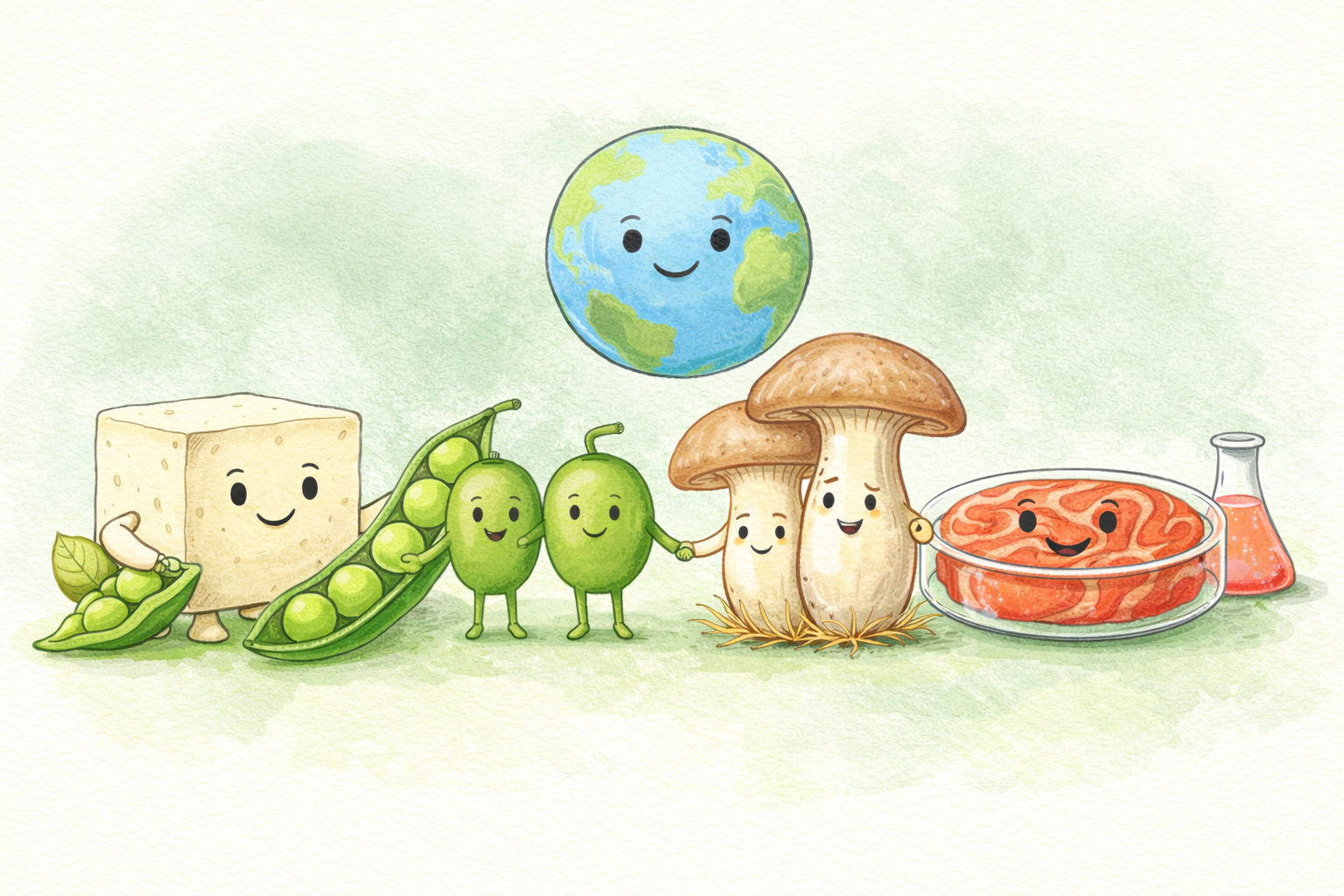
Cell-e-brities Series
Van: Hello, everyone! Welcome to our ‘Cell-e-brities’ show. I am your host, Van. Today, we are chatting with ‘Alternative proteins’, which are innovative food sources derived from non-animal origins like plants, fungi, and cultured cells. These proteins are spearheading a revolution in the food industry by offering sustainable, ethical, and nutritious alternatives to traditional animal-derived proteins. Let’s uncover their journey and impact, as they transition from niche to mainstream, promising a more sustainable future for all. We have four different ‘Alternative Proteins’ guests at our show.
(Guest 1: Soy Protein)
👩🔬Van: Welcome, Soy Protein! You are an outstanding plant-protein source comparable to animal products. Can you share a bit more about how you contribute to sustainable food production?
Soy Protein: Absolutely, Van! Derived from soybeans, a leguminous plant that enriches soil by fixing nitrogen, I require up to 87% less water and 98% less land compared to traditional livestock farming. I can produce up to ten times more protein per acre than beef.
👩🔬Van: That’s amazing! Ten times more protein per acre! And your nutritional benefits?
Soy Protein: I have a complete protein profile, meaning I contain all essential amino acids needed for human health. I’m low in saturated fat, cholesterol-free, rich in fiber, vitamins, and minerals, and have the ability to lower LDL cholesterol levels and reduce heart disease risk. My isoflavones also offer potent antioxidant properties.
👩🔬Van: Being an overachiever of the protein world, how have you captured the food industry’s attention?
Soy Protein: I am found in products like tofu, tempeh, soy milk, and various plant-based meat alternatives. With the escalating demand for plant-based foods, my market is projected to reach $16 billion by 2026.
👩🔬Van: $16 billion, that’s huge number! Now, a common misconception is that plant proteins are inferior to animal proteins. Your thoughts?
Soy Protein: That’s an important point, Van. Plant proteins can match animal proteins when part of a balanced diet, providing all essential amino acids and added benefits like fiber and antioxidants. It’s time to debunk the myth that plant proteins are less nutritious. Well, bioavailability is another useful parameter to consider but given the benefits, it’s a great time to consider plant-based foods.
👩🔬Van: Well said! It’s crucial to highlight that plant proteins don’t just compete, they often surpass animal proteins in terms of health benefits, debunking old myths with new science, and leading with innovations in the plant-based food sector.
(Guest 2: Pea Protein)
👩🔬Van: Next, let’s welcome Pea Protein. Tell us, how do you fit into the alternative protein landscape?
Pea Protein: Thanks, Van! Originating from yellow peas, I’m high in protein and iron. My production is environmentally friendly, requiring less water and producing fewer greenhouse gases than animal protein. Plus, I’m hypoallergenic, making me ideal for those with soy or gluten allergies.
👩🔬Van: And nutritionally?
Pea Protein: I am rich in branched-chain amino acids, crucial for muscle growth and repair, and a great source of iron. My neutral taste and smooth texture make me a perfect ingredient in various recipes, from protein powders to meat alternatives and dairy-free products. The market for pea protein is expected to grow to $1.4 billion by 2025.
👩🔬Van: Impressive! Your unique features clearly make you a powerhouse in the plant-based market. It’s exciting to see such growth potential, pointing to a greener and healthier future.
(Guest 3: Mycelia (Fungal Protein))
👩🔬Van: Now, let’s turn to Mycelia, a fascinating newcomer. Tell us about yourself.
Mycelia: Thank you, Van! I originate from fungi’s root-like structures, mycelium. Utilizing agricultural waste as a growth medium, my production is highly efficient and sustainable. Known for my meaty texture and umami flavor, I’m an excellent ingredient in meat substitutes.
👩🔬Van: What about your nutritional profile?
Mycelia: I am packed with high-quality protein, fiber, and essential amino acids, plus vital nutrients like B vitamins and antioxidants. My low-fat and cholesterol-free nature makes me a heart-healthy choice, and my production contributes to less suffering in the food chain.
👩🔬Van: That’s awesome! You’re not just good for our hearts, but also kind to the planet. Love how you’re making a big impact with such a light footprint!
(Guest 4: Lab-Grown Meat)
👩🔬Van: Lastly, Lab-Grown Meat, you represent the cutting edge of food technology. Share your journey with us.
Lab-Grown Meat: Thanks, Van. I am created by culturing animal cells, meaning I provide real meat without animal farming. This drastically cuts land use, water consumption, and greenhouse gas emissions by over 95% and 96% respectively compared to traditional meat.
👩🔬Van: How would you compare yourself nutritionally to animal meat?
Lab-Grown Meat: I am designed to match the taste and texture of traditional meat while being customizable to reduce fats or enhance nutrients like omega-3 fatty acids. Free from antibiotics and hormones, I offer a cleaner and more ethical alternative.
👩🔬Van: Do you face any challenges along the way?
Lab-Grown Meat: Scaling production and gaining regulatory approval are significant hurdles, but progress is promising, with several companies already marketing in specific regions.
👩🔬Van: A huge thank you to our incredible guests! It’s evident that alternative proteins play a vital role in shaping a sustainable and nutritious future. As we conclude, let’s reflect on the broader impact of our dietary choices, particularly on global warming. Traditional animal agriculture is a major contributor to greenhouse gases, deforestation, and water depletion. By choosing alternative proteins, we’re not only safeguarding our health but also protecting our planet. Every meal is an opportunity to vote for a sustainable future.

Image source: https://gfi.org/defining-alternative-protein/
To dive deeper, check out these research-backed articles!

https://www.ncbi.nlm.nih.gov/pmc/articles/PMC7142285/

https://gfi.org/defining-alternative-protein/

https://www.ncbi.nlm.nih.gov/pmc/articles/PMC9316106/

https://www.nature.com/articles/s41467-024-47091-0#citeas

https://www.sciencedirect.com/science/article/pii/S2214799322000716

https://www.science.org/doi/full/10.1126/science.aaq0216

https://www.science.org/doi/10.1126/science.aam5324

https://www.nature.com/articles/s43016-021-00265-1#citeas
Thank you, everybody. Stay safe, stay happy.
Leave a Reply