-

How the world got hooked on a fossil fuel to grow its food
Half the nitrogen in our bodies most likely comes from an industrial process. The connection between nitrogen, energy, and food is way more than we expect. This science story traces that link, and there are also some fun facts waiting at the end. Many of us have been hearing about natural gas shortages and how…
-
Precision fermentation: Brewing milk, eggs, and meat without animals
Microbes can now make the same proteins found in milk, eggs, and meat without using animals. This story explains how precision fermentation works, what makes it different from traditional fermentation, and why it matters for food, science, and sustainability. Read more here to learn the science behind it and where the technology stands today. If you’re curious…
-

Evidence-Based Teaching: Through the Lenses of Student, Scientist, and Teacher
Inspired by a teaching course I took during my postdoc, this article brings together interesting insights that come not only from research but also from the experiences we carry as students and as scientists. As scientists, we are primarily trained to do research and spend years learning how to troubleshoot experiments and analyze data. However,…
-
Beyond the Rubric – The Science and Engineering Fairs
For a few years now, I’ve been volunteering as a judge at regional science and engineering fairs. It is an experience I look forward to every year! I wanted to share my perspective on these fairs and talk about things I’ve learned along the way. These regional fairs are a big deal because they can…
-
From Nav1.8 to Suzetrigine: A New Approach to Pain Relief
This article was originally published on Medness (https://medness.org/nav1-8-and-suzetrigine/) The 2025 FDA approval of Suzetrigine reflects a significant milestone in pain pharmacology representing the first novel class of non-opioid analgesics in over two decades. Pain starts as an electrical signal in peripheral sensory neurons, specifically nociceptors where voltage-gated sodium channels (like Nav1.7, Nav1.8) open to let…
-

Part-2: Is Biology being stereotyped?
Lately, I’ve been thinking about why some fell in love with biology and why many others run away from it. Let’s be honest, usually, when you tell someone you’re into biology, they assume you’re going to be a doctor. I’ll admit, I was one of those people. But here I am today, a scientist instead,…
-

Part-1: What does it mean to be curious?
When we are children, we are professional question-askers. We live in a world of “Whys.” Why is the sky blue? Why do birds fly? Why do I have to sleep? Back then, no question was too small or too silly. We were constantly trying to fill the gaps in our understanding of the world. Sometimes…
-
HIV Capsid and Lenacapavir: A breakthrough in HIV treatment
This article was originally published on Medness (https://medness.org/hiv-capsid-and-lenacapavir-a-breakthrough-in-hiv-treatment/). Breakthrough therapies come from years of research starting with identifying and validating the right biological target, and understanding how it drives disease. Once considered just a protective shell, the capsid was gradually revealed through structural and functional studies to be a central organizer of infection and eventually…
-
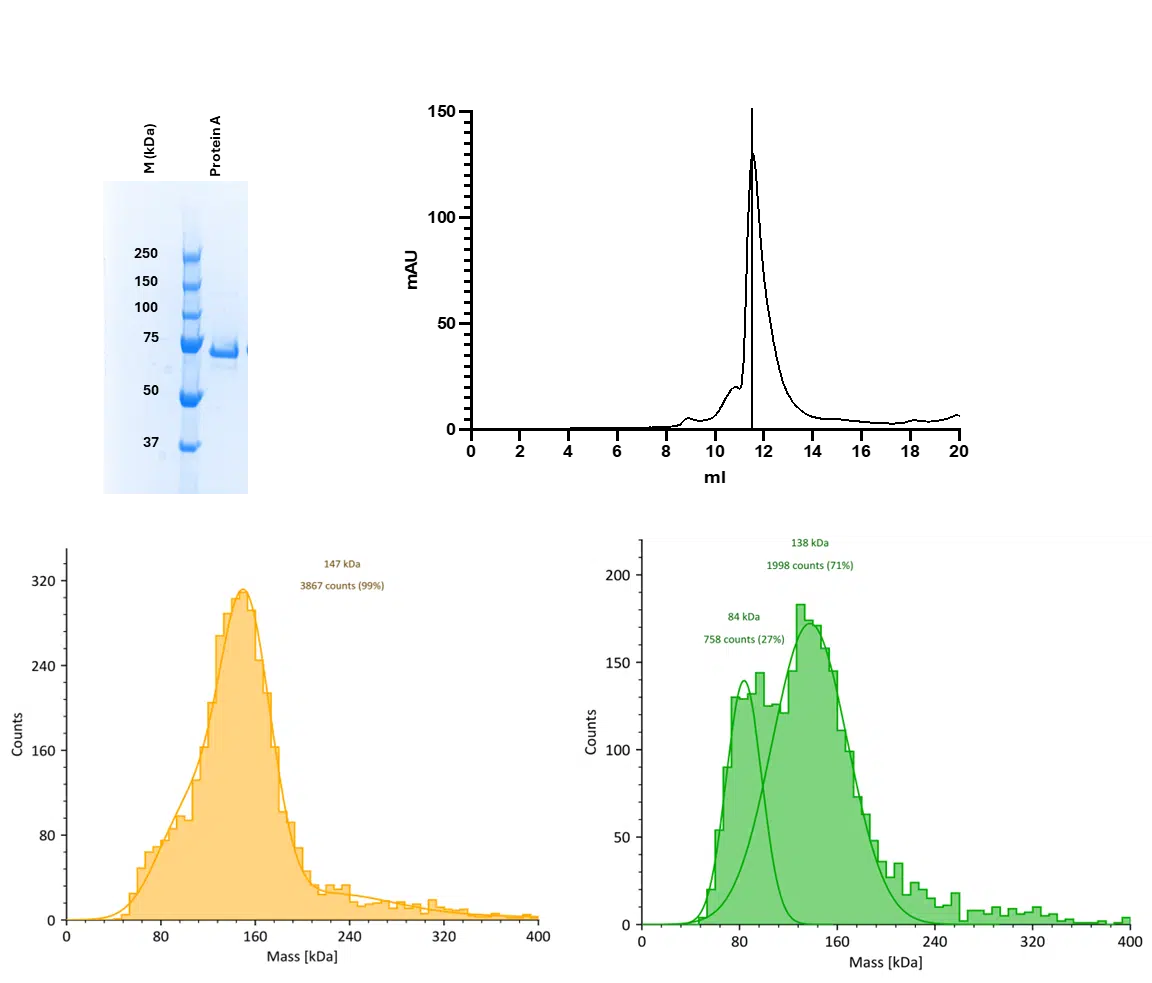
Mass Photometry: An Easy Way to Determine Protein Oligomerization and Heterogeneity
Mass photometry (MP) is a rapid, label-free technique for assessing protein oligomerization and heterogeneity using minimal sample volumes (10 µL at 10–50 nM). It detects light scattering from individual proteins, generating histograms revealing different oligomeric states. MP is particularly useful for early-stage quality checks before complex studies like cryo-EM or crystallography.
-

Precision fermentation: Brewing milk, eggs, and meat without animals
Proteins are crucial for nutrition and food texture, but conventional animal farming poses significant environmental and ethical challenges. Precision fermentation (PF) offers a solution by producing animal-free proteins through microbes, promising increased efficiency, sustainability, and tailored nutrition. Companies are leading this innovation, raising questions about safety and consumer acceptance.
